|
Acronym
|
snicoth
|
|
Name
|
chiral cubocta-tetrahedral honeycomb,
snub cubocta-tetrahedral honeycomb
|
|
|
 © ©
|
|
Vertex figure
|
 © ©
|
|
Pattern
|
alternatingly stacked vertex layers:
o   +   o---o---o---o   +   o
| ·   · | ·   · | + | ·   · |
o---o---o   +   o---o---o---o
  · | + | ·   · | ·   · | + |
+   o---o---o---o   +   o---o
  · | ·   · | + | ·   · | ·
o---o   +   o---o---o---o   +
|   | ·   · | ·   · | + | ·
o---o---o---o   +   o---o---o
| ·   · | + | ·   · | ·   · |
o   +   o---o---o---o   +   o
(odd layers)
· | + | ·   · | ·   · | + | ·
  o---o---o---o   +   o---o--
· | ·   · | + | ·   · | ·   ·
--o   +   o---o---o---o   +
+ | ·   · | ·   · | + | ·   ·
--o---o---o   +   o---o---o--
·   · | + | ·   · | ·   · | +
  +   o---o---o---o   +   o--
·   · | ·   · | + | ·   · | ·
--o---o   +   o---o---o---o
· | + | ·   · | ·   · | + | ·
(even layers)
where:
o  = actual vertex position
|, --- = edges within the respective layer
·  = visual guide for vertex positions of other layer
+  = intersection points of orthogonal 4-fold rotation axes
|
This chiral scaliform honeycomb was found in 2025 by M. Jacquet.
From the pattern it becomes obvious that it can be seen as a special diminishing of octet.
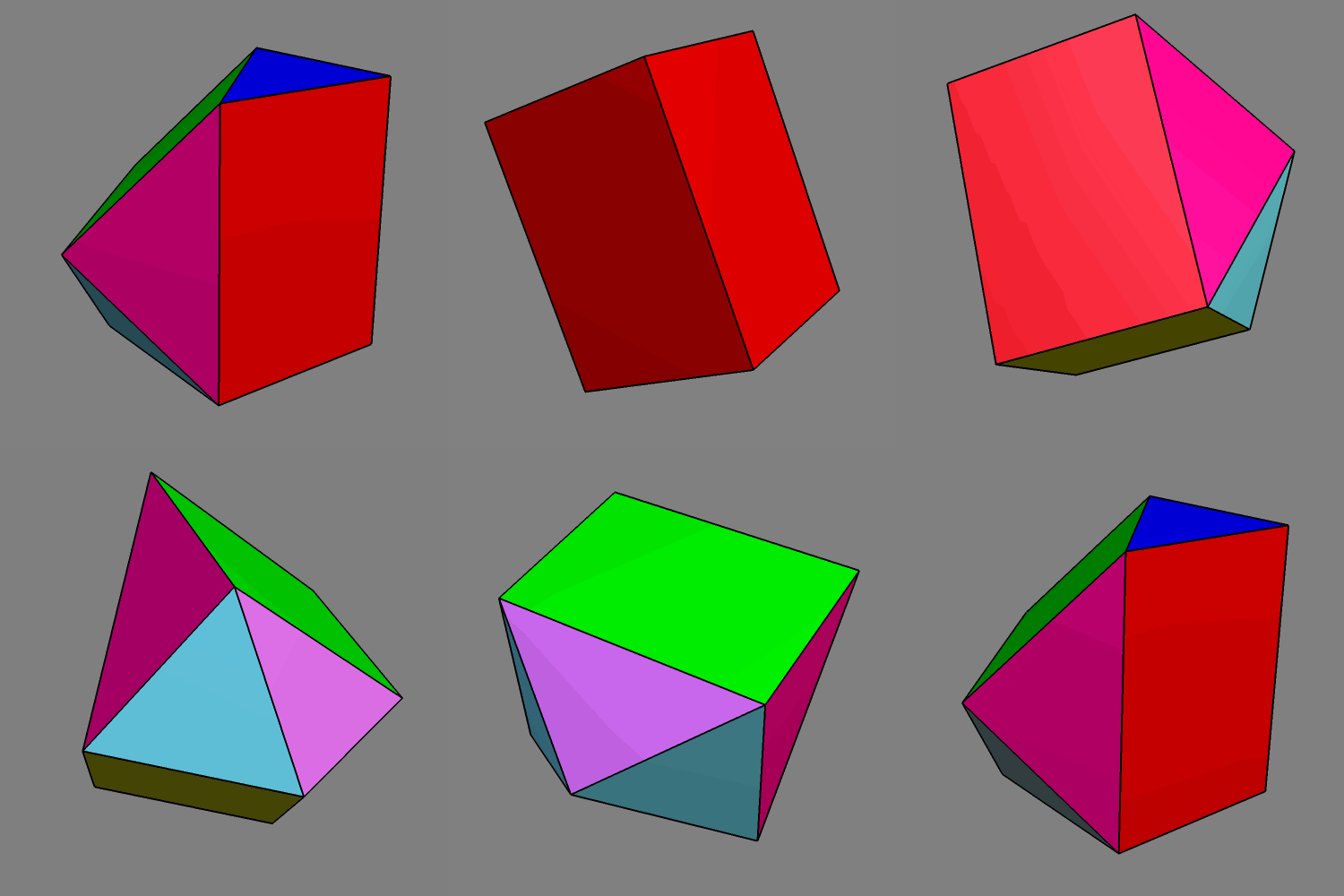
In fact, its above shown vertex figure likewise is a 3-diminished co,
which in turn was the verf of octet.
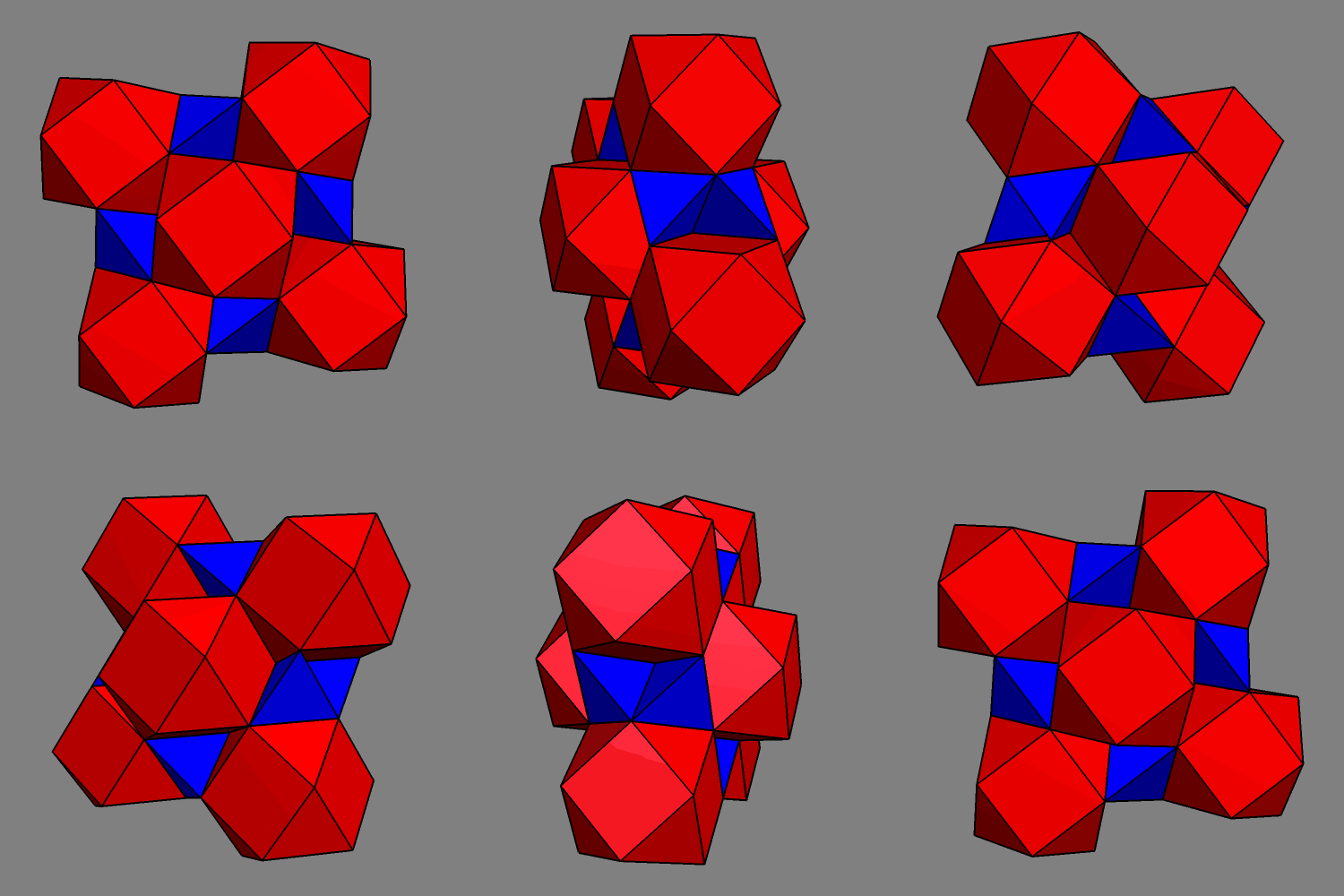
The whole stacked honeycomb, while having orthogonal to the depicted vertex layer patterns just 4-fold rotation symmetry around its co pilar axes, the stacking itself
has full mirror symmetry across those vertex layer patterns each.
However, when considering its individual cells, the tets get used in antiprismatic symmetry only, thence their corners, although on their own becoming mirror symmetrical only, still look all alike;
its squippies get used in square-diagonal mirror symmetry only, thence the vertices of those fall into 4 classes: tip and 3 different base corner types
wherefrom one class splits further into a right and left enantiomere;
and its coes get used in axial chiral, i.e its 4-fold rotational symmetry only, thence the vertices of those fall into 2 classes: polar and equatorial ones.
And indeed, the above shown vertex figure has,
-
besides the 2 regular triangles (cyan verfs of tets)
-
one unit square (yellow verf of tip of squippy),
-
4 half-square triangles (verfs of base corners of squippy),
wherefrom 2 come in asymmetrical positions (magenta) in mirror symmetrical orientations as well as one each in lavender and blue,
-
and 3 verfs of co, wherefrom 2 (red) come as a globally mirror symmetrical pair (its polar vertices) and one additional
(green) for its equatorial vertices.
The central bit of the above pic shows, that the coes form infinit pilars along the global 4-fold rotation axes, mutually directly attached at their polar squares.
It might be pointed out additionally, that coes and tets are incident on type C edges only. The interlacing cells here are the remainders, i.e. the squippies.
Incidence matrix
(N → ∞)

4N |  2  1  4  2 | 1  6  4  6 | 3  2  5
---+-------------+------------+--------
 2 | 4N  *  *  * | 1  2  0  0 | 2  0  1  type A
 2 |  * 2N  *  * | 0  0  0  4 | 0  2  2  type B
 2 |  *  * 8N  * | 0  1  1  2 | 1  1  2  type C
 2 |  *  *  * 4N | 0  2  2  0 | 2  0  2  type D
---+-------------+------------+--------
 4 |  4  0  0  0 | N  *  *  * | 2  0  0  {(AAAA)]
 3 |  1  0  1  1 | * 8N  *  * | 1  0  1  {(ACD)}
 4 |  0  0  2  2 | *  * 4N  * | 1  0  1  {(CCDD)}
 3 |  0  1  2  0 | *  *  * 8N | 0  1  1  {(BCC)}
---+-------------+------------+--------
12 |  8  0  8  8 | 2  8  4  0 | N  *  *  co
 4 |  0  2  4  0 | 0  0  0  4 | * 2N  *  tet
 5 |  1  1  4  2 | 0  2  1  2 | *  * 4N  squippy